
When it Lands on You!
- Seamus Leary

- Apr 26
- 3 min read
There’s a moment most leaders recognize immediately.
It rarely comes with warning. It doesn’t wait for a convenient time.
Sometimes it starts with a phone call. Sometimes it’s a system glitch. Sometimes it’s a sentence no one wants to hear: “We’ve got an issue.”
And just like that, everything shifts.
Priorities change. Time compresses. People start looking in your direction.
Not later. Right then.
The Reality Behind Preparedness and Resilience
From the outside, preparedness and continuity can look structured. Organized. Documented.
Plans are written. Processes are mapped. Roles are assigned.
On paper, it all makes sense. But real-world pressure has a way of rewriting the script.
Information comes in incomplete. Decisions need to happen faster than expected. What seemed clear in a meeting suddenly feels less certain in motion. And in that moment, the question is no longer, “Do we have a plan?”
It becomes:
Do we know what to do next?
Can we keep moving?
Are we ready to lead through this?
Where Plans Meet Reality
Most organizations already have something in place. A continuity plan. A preparedness framework. A set of procedures meant to guide the response. That’s a strong starting point.
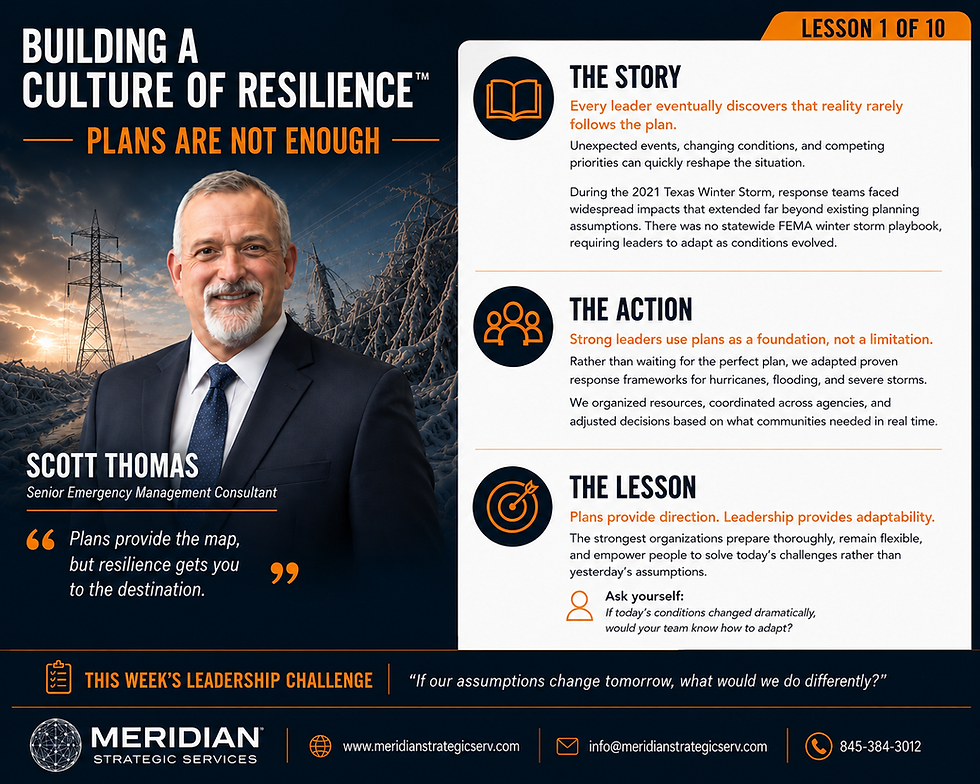
But experience shows something important: Plans that look solid in a controlled environment don’t always hold under pressure. Not because they were poorly built. Because pressure changes how people think, communicate, and act. It reveals gaps. It tests assumptions. It forces decisions before everything is known. That’s why effective preparedness and resilience extend beyond documentation. They live in how teams operate together when the situation is unfolding in real time.
What Holds When It Matters Most
When disruption hits, three things tend to matter more than anything else: Clarity: People understand their roles and responsibilities without hesitation. Coordination: Teams move together, not in parallel confusion. Confidence: Leaders are able to make decisions without second-guessing every step. These are not built in the moment. They are built before it. That’s the difference between having a plan and being ready.
Building Capability, Not Just Content
Organizations often invest significant time in developing plans. What matters just as much is what happens after those plans are written. Are they tested? Are they exercised? Do they reflect how the organization actually operates day to day? Preparedness and resilience become real when they are practiced, refined, and integrated into how teams work.
That includes:
Identifying where processes slow down
Understanding how decisions are made under pressure
Strengthening communication across roles and functions
The goal is not perfection. It’s readiness that holds when conditions are far from ideal.
A Different Kind of Partnership
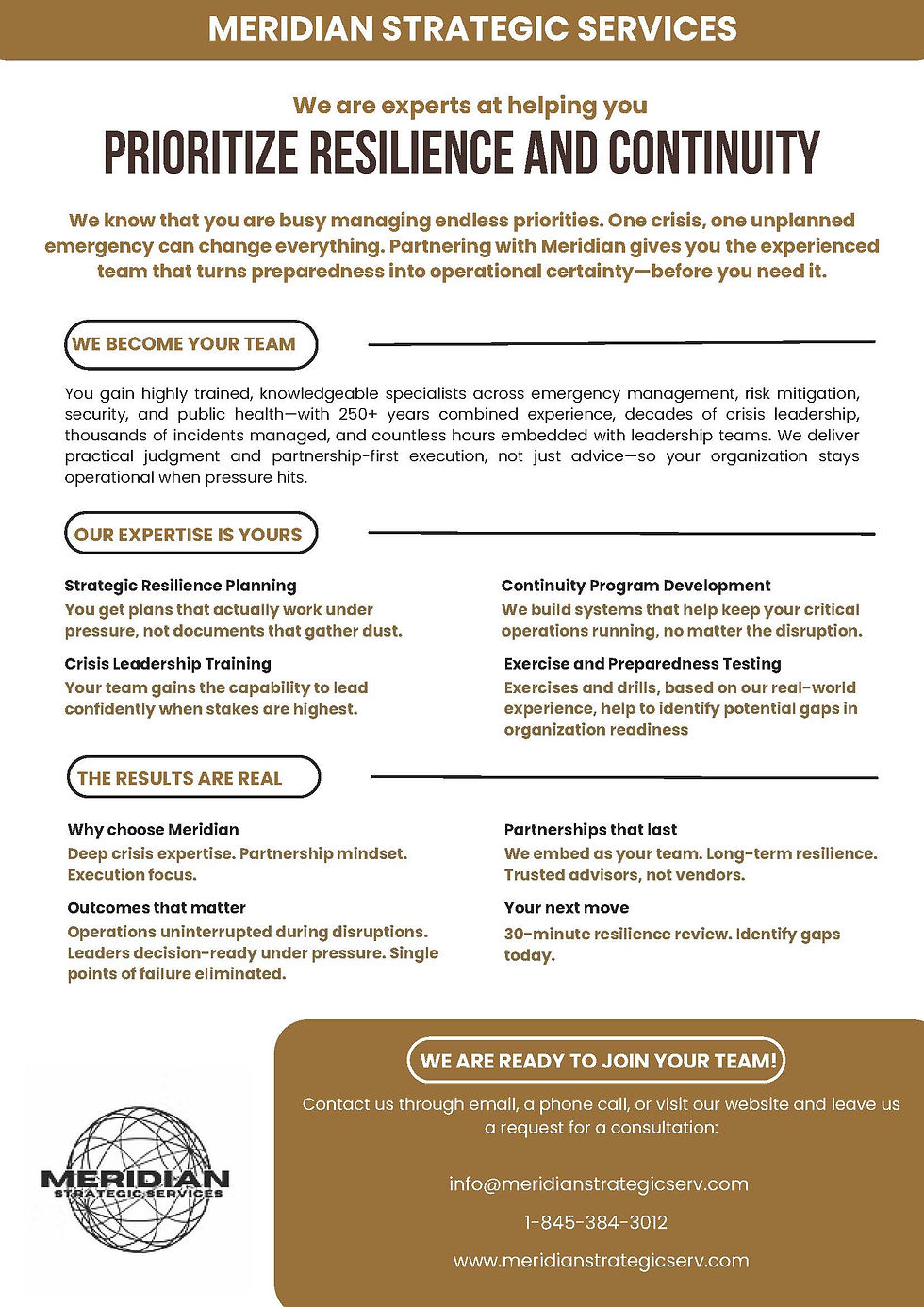
There is also a shift happening in how organizations approach this work. Rather than relying on outside advice alone, many are looking for partners who can step into the environment with them. People who understand the pace, the pressure, and the stakes. People who can work alongside leadership, not outside of it. That kind of partnership focuses on execution as much as strategy. It’s less about handing over a document…and more about helping teams build capability that lasts. As reflected in the Meridian approach, the focus is on embedding with organizations and delivering practical, real-world support so operations continue when pressure hits.
Before It Happens
No organization gets to choose when disruption shows up. But every organization has a choice in how prepared it is when it does. Preparedness and resilience are not about anticipating every possible scenario. They are about building the ability to respond, adapt, and continue… even when the situation is uncertain. Because at some point, in some form, that moment will arrive. And when it does, it will land on someone.
Taking the Next Step
For leaders responsible for operations, people, and outcomes, this work carries real weight.
A short, focused review can help surface:
Where strengths already exist
Where pressure could expose gaps
What would happen if disruption occurred today
It’s a simple way to move from assumption to clarity. And to ensure that when the moment comes…the organization is ready to meet it.

Comments